Aldryami
Elves in Glorantha are sapient plants. They call themselves the Aldyrami, after the forest-mother Aldrya. While most of the cultures we’ve covered follow what we can call the Human Mythos, the Aldyrami follow the Plant Mythos, which worships Flamal the Seed Father as the progenitor of all plants. Their high time was in the Green Age, when great forests covered the world, before they were eaten by trolls and destroyed by Chaos.
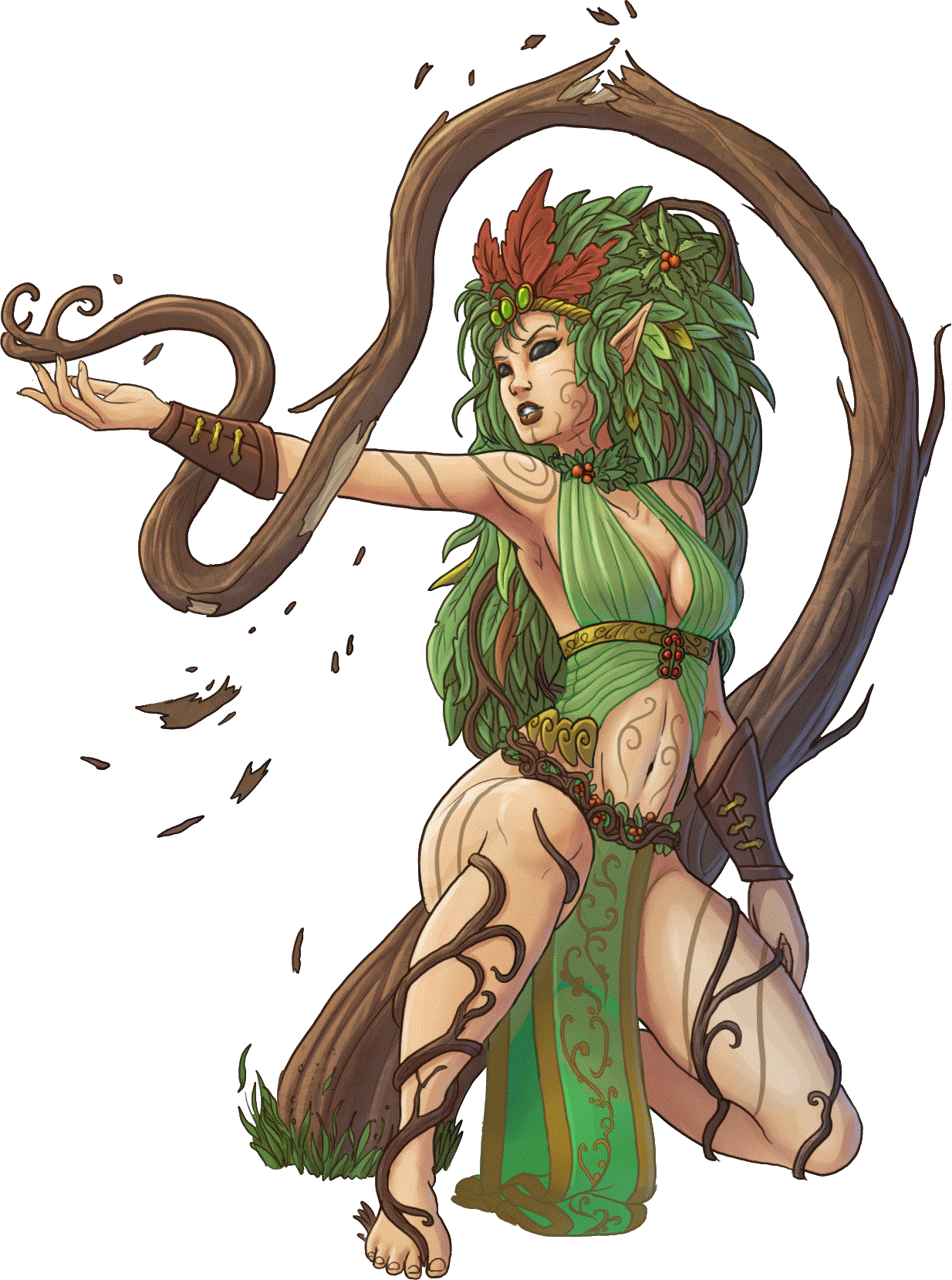
Their biology and culture is extremely strange, and many facets of their beliefs are beyond the comprehension of most humans. Each Aldryami resembles a certain plant, and no two Aldyrami look alike. Some Aldyrami are specifically grown to interact peacefully with humans, and these elves are always beautiful and striking in their resemblance to humanity. Other Aldryami look like walking trees. An Aldyrami that is kin to a mighty redwood is truly a sight to see.
In their time, the God Learners developed a system of colours to identify different cultures and ‘species’’ of elf. For their part, the Aldryami always live in forests that match their type of tree; green elves will always live in pine woods, for example. The different elf colours (and the Aldyrami name for them) are as follows:
Brown Elves: Mreli. Elves of deciduous trees. The most common type of elf in Third Age Genertela. Since elves are related only to local species of trees, not all varieties of brown elves are known to each other.
Green Elves: Vronkali. Elves of coniferous trees. They are the sole inhabitants of the Winterwood in northern Fronela. They are also found in all brown elf forests, which they protect while the Mreli hibernate. Elves do not segregate themselves on type, so green elves are mixed with brown.
Yellow Elves: Embyli. Elves of tropical evergreen trees. They are the most common type of elf in Pamaltela. While most elves are strictly vegetarian, Embyli occasionally eat raw meat. In places where they meet with green and brown elves, they form one society.
Black Elves: Voralans. Unlike other elves, they are not descended from Flamal. They are Darkness creatures who worship Mee Vorala, and they claim kinship with fungi. They live underground and often have a cordial relationship with trolls.
Blue Elves: Murthoi. Elves of seaweed and other aquatic plants. They cannot survive outside of water. The top half of their bodies resembles that of surface elves, but their lower half tapers into a long tail. They worship the sea goddess Murthdrya.
Red Elves: Slorifings. Elves of ferns and spore-bearing plants. The first great dynasty of the plant world. They are also called goblins by humans, and they are small in size and fierce in nature. They are the most varied and least humanoid Aldyrami.
This list doesn’t into account the many creatures which live among the Aldyrami but bear little resemblance to them or are rarely seen by outsiders, like the dryads, the love nymphs and the Great Trees. There are also rarer elf subtypes like the Moon Elves and the Fire Elves. Little is known about them, but their lifecycles would be extraordinary even compared to other elves.
Each elf forest is governed by a Council of Elders. These are headed by the Great Trees, elven demigods that were born in the God Time. The Council includes representatives of High King Elf, Elder Sister, High Gardener and the various forest gods. There is also the Chosen One, an empty seat reserved for someone who appears according to prophecy.
Elves reproduce by internal fertilisation. They give birth to a seed which eventually grows into a fruit-bearing plant. When ripe, the fruit of the plant contains newborn elf. The lifespans of elves are long, but they are not immortal. Some elves rarely make it to 200 years, while the redwood elves are rumoured to live for a millennium. As elves grow older, they become more and more treelike until they lose their sapience; they go to sleep and do not wake up.
Elves are reclusive creatures. They think of the other races only in terms of the threat they pose to the forest. Trolls eat the tree, humans burn the trees and dwarves wronged the elves back in the God Time. They do not forget a grudge, but they always remember a kindness. A human who proves themselves to be loyal and helpful may one day earn the status of elf-friend. There are also places in the world where elves and humans live side-by-side. However, elves as a whole do not like humans. They are also masters of archery and poisons. It is unwise to venture too deep into the forests of Glorantha for this reason.
A group of Aldryami from the Arstola forest have started the movement of the New Seed Travellers. Elves from around the world are performing a great heroquest that will give them the New Seed. When they find it, the Reforestation begins. Thousands of secretly stockpiled seeds across Genertela will respond to the Awakening Dances, and the great forests of the Green Age will return to the world.
High King Elf
High King Elf was an Aldryami hero in the God Time. He took Death deep into the heart of the Mostal and slew that god for the good of the world. When the Sun died, the world became dark and frozen, filled with trolls and other things that wanted to eat the slumbering forests. High King Elf selflessly defended the forests, fighting off all threats until the Dawning. High King Elf’s work was done when the Sun rose over the edge of the world, and its rays returned life to Aldrya.
In modern Aldyrami society, every Council of Elders has a representative of High King Elf, who will often simply be referred to as High King Elf. Each Elder speaks for a different denizen of the forest; High King Elf speaks for the elves.
Source Material: Lore Of Glorantha
Stock art by Brett Neufeld from DriveThruRPG.com